Outsource in the Philippines: Benefits and Strategies
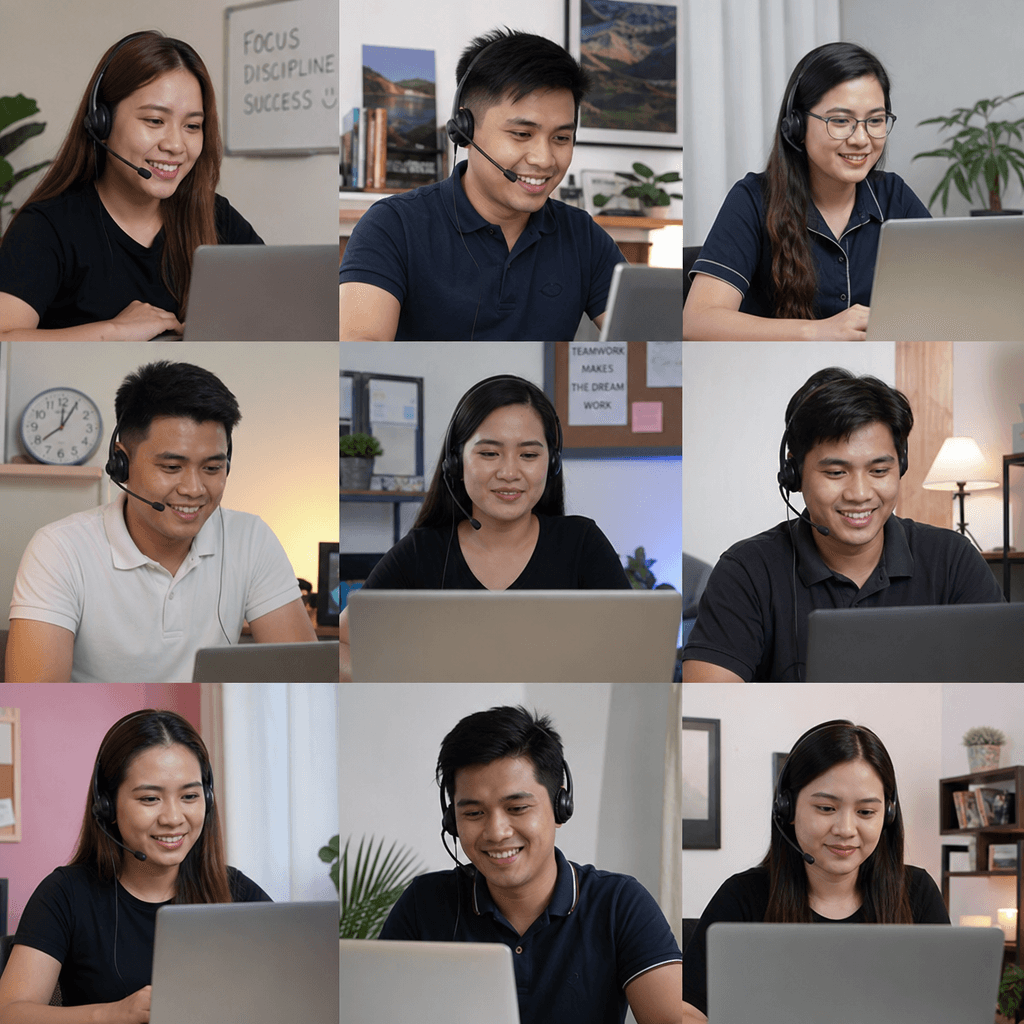

Outsource in the Philippines: A Practical Guide
For many growing companies, outsourcing in the Philippines is a practical way to add capacity without building a large local team first. The country has a mature business process outsourcing industry, strong English use, and a workforce used to serving global customers. The best results come when companies pick the right model, set clear work rules, and treat Filipino team members as part of the team, not as a low-cost add-on.
Why do companies outsource in the Philippines?
Companies outsource in the Philippines because it can combine cost control, service quality, and work flexibility in one hiring market. English is an official language for communication and school use in the Philippines, which helps reduce friction in customer support, admin, sales help, finance support, and other communication-heavy roles. The country's IT-BPM sector is also a large, mature industry, with 2025 revenue reported above $40 billion and employment close to 1.9 million workers, giving businesses access to a deep service network. (elibrary.judiciary.gov.ph)
That mix matters. Outsourcing is not just about cheaper labor. It is about freeing your internal team to focus on strategy, sales, product, and customer relationships while trained remote staff handle repeatable or specialist work. For small businesses, this may mean hiring a virtual assistant or bookkeeper. For larger companies, it may mean building an offshore customer experience, finance, healthcare support, or software team.
The biggest benefits of Philippines outsourcing
Philippines outsourcing works best when the work is recurring, process-led, and easy to measure. The benefits are strongest when a business documents expectations, hires for the right skill level, and manages the offshore team with the same care it gives local employees.
Key advantages include:
Lower operating costs: Businesses can often cut salary, office, recruitment, and overhead costs compared with hiring the same role locally. The exact savings depend on the role, seniority, tools, management layer, and whether you hire directly, through a platform, or through a provider.
Strong communication fit: Because English is widely used in education, business, and customer service, Filipino professionals are often well suited for voice, written support, coordination, and client-facing tasks. (elibrary.judiciary.gov.ph)
Established BPO infrastructure: The BPO Philippines ecosystem covers contact centers, healthcare services, shared services, IT, software development, animation, and game development, according to IBPAP's investor materials. (ibpap.org)
Flexible scaling: You can start with one offshore staff member, then grow into a team once the process works.
Time-zone coverage: For U.S., Australian, and European companies, Philippine teams can support extended hours, overnight cover, or near-24/7 service with the right scheduling and labor planning.
Cultural fit with Western markets: Many Filipino professionals have experience serving U.S., Australian, U.K., and global customers, which can make onboarding smoother than in markets where business communication norms differ more sharply.
These benefits are why business process outsourcing in the Philippines has moved beyond call centers. Many companies now use outsourcing solutions for e-commerce support, real estate admin, digital marketing operations, bookkeeping help, lead management, software QA, data processing, and executive support.
Common roles that fit offshore staffing Philippines models
Offshore staffing Philippines setups work best for roles that need steady hours and repeatable workflows. The right role depends on whether you need task execution, customer interaction, technical delivery, or operational ownership.
Common starting points include:
Virtual assistants and executive assistants for inbox management, calendar coordination, research, travel planning, reporting, and CRM updates.
Customer support representatives for email, chat, phone, returns, order tracking, help desk tickets, and customer retention workflows.
Sales support staff for lead list building, CRM hygiene, outbound appointment setting, proposal coordination, and follow-up reminders.
Accounting and bookkeeping support for transaction coding, invoice processing, reconciling, payroll prep, and reporting help.
E-commerce operations staff for product uploads, customer messages, marketplace admin, inventory updates, and review monitoring.
Marketing operations support for content scheduling, social media coordination, basic design tasks, campaign reporting, and SEO admin.
Technical and IT support for software testing, help desk triage, website maintenance, data work, and development support, depending on seniority.
A good rule is to outsource work that is important but not dependent on physical presence. If a role requires local licensing, in-person customer visits, sensitive executive decision-making, or deep institutional judgment, keep ownership internal while assigning defined support tasks offshore.
How much does it cost to outsource in the Philippines?
The cost to outsource in the Philippines varies by role, experience, work schedule, hiring model, and management support. Entry-level admin roles are usually less expensive than specialized accounting, software, analytics, or leadership roles, while night-shift cover, advanced tools, and dedicated account management can raise the total cost. Instead of focusing only on salary, compare the full cost of recruitment, benefits, payroll compliance, equipment, software, training time, supervision, and replacement risk.
There are three common ways to structure the cost:
Freelance or contractor hiring: Often flexible and fast, but it needs careful attention to scope, privacy, IP ownership, performance management, and worker classification.
Direct offshore staffing through a platform or staffing partner: Useful when you want dedicated people who feel like part of your team, while the provider may support recruitment, payroll, HR, or compliance.
Traditional BPO provider: Better for managed processes such as customer service queues, technical support desks, or back-office workflows where the provider owns more of the training, reporting, and day-to-day supervision.
Full-time staffing is usually the stronger choice when the role is core to daily operations. Part-time support can work for founders, startups, and seasonal workloads, but it may limit availability, flow, and depth of context. If the work affects customer experience or revenue, full-time coverage often creates better accountability.
Choosing between a BPO, staffing platform, and direct hire
Not every outsourcing company in the Philippines offers the same level of control. Some sell fully managed services, while others help you recruit dedicated staff who report directly to your business. Before signing an agreement, decide whether you want a vendor to own the process or a remote employee to become part of your operating rhythm.
Use this decision checklist:
Choose a BPO provider if you need a managed department, clear service levels, workforce scheduling, quality assurance, and supervisor oversight.
Choose an offshore staffing provider if you want dedicated team members, direct daily management, and help with hiring or employment administration.
Choose a freelancer if the work is project-based, low-risk, and easy to define in outputs.
Choose an EOR-style arrangement if you need local employment administration without setting up your own Philippine entity; legal guides note that EOR models are commonly used for companies hiring in the Philippines without a local entity, but they must be structured carefully. (practiceguides.chambers.com)
The more control you want over tools, training, and workflow, the more important it becomes to clarify who manages performance, who handles HR matters, who owns equipment, and who is responsible for compliance.
The risks are manageable with the right structure
Outsourcing is powerful, but it is not risk-free. Time zones, data access, compliance, quality control, and retention all need planning. Philippine technology outsourcing guidance highlights the importance of addressing privacy, data privacy, labor structure, and service provider responsibilities in outsourcing agreements. (practiceguides.chambers.com)
Practical risk controls include:
Data security: Use role-based permissions, password managers, multi-factor auth, secure devices, and quick access removal during offboarding.
Clear contracts: Define privacy, IP ownership, work product, notice periods, performance standards, and dispute processes.
Compliance review: Get local legal or HR guidance when hiring long-term staff, especially if a worker looks more like an employee than an independent contractor.
Time-zone planning: Set core overlap hours, response-time rules, meeting windows, and escalation paths.
Quality assurance: Use scorecards, call reviews, ticket audits, sample checks, and weekly feedback rather than waiting for problems to show up.
Retention planning: Pay fairly for the role, offer predictable communication, recognize good work, and give offshore staff a path to learn more valuable tasks.
The companies that struggle often treat outsourcing as a set-and-forget plan. The companies that succeed create clear processes, give context, measure outcomes, and build trust.
A simple onboarding plan for better results
A strong first 30 days can decide whether outsourcing solutions work or turn frustrating. Start with one role, one manager, and a short list of measurable responsibilities. Then improve the process before adding more people.
A practical onboarding flow looks like this:
Document the role before hiring. List daily tasks, tools, required experience, working hours, success metrics, and tasks the person should not own.
Create a training library. Record screen-share videos, write step-by-step SOPs, and provide examples of good and bad work.
Assign a direct manager. Offshore staff need one clear source of priorities, not mixed requests from several people.
Start with supervised work. Review early output closely, give fast feedback, and fix mix-ups before habits form.
Measure outcomes weekly. Track quality, speed, attendance, customer satisfaction, backlog reduction, or revenue support depending on the role.
Build team connection. Include Filipino staff in meetings, updates, recognition, and process improvements so they understand the business, not just the task list.
This approach turns outsourcing from a cost-cutting test into a repeatable operating system.
The real value is capacity, not just savings
The biggest benefit of outsourcing to the Philippines is not simply paying less for work. It is the ability to build capacity faster, serve customers for more hours, reduce bottlenecks, and let your senior team focus on higher-value decisions. With a mature IT-BPM industry, broad English-language capability, and established service providers, the Philippines remains one of the most practical places for business process outsourcing and dedicated offshore teams. (pna.gov.ph)
If you are planning to outsource in the Philippines, start with a role that has clear tasks, measurable outcomes, and enough recurring work to justify training. Choose the model that matches your need for control, compliance support, and management depth. Done well, philippines outsourcing can help a business become leaner, faster, and more resilient without hurting day-to-day quality.